If you’ve ever shopped for outdoor seating, chances are you’ve wondered how much abuse a chair can take—especially when it’s meant to stand up to rain, sun, and months of guests or family gatherings. As someone who’s been in the outdoor plastic wood (also called “composite wood”) furniture supply business for over a decade, this question hits close to home. I get emails and calls every week from landscapers, café owners, and homeowners asking the same thing: What is the actual weight capacity of outdoor plastic wood chairs? It’s not a one-size-fits-all answer, and skipping the details can lead to costly replacements or safety issues down the line. Let me break this down like I would for a first-time café owner needing to outfit a patio or a homeowner replacing their rotting wooden porch chairs. Outdoor Plastic Wood Chairs

First, let’s get one myth out of the way: not all outdoor plastic wood is the same. Cheap, thin composite made with mostly recycled plastic and fillers won’t hold a candle to high-quality, engineered outdoor plastic wood. The difference boils down to the formula we use at our factory—our chairs are made from a mix of 30% to 40% high-density polyethylene (HDPE) plastic, 50% to 60% virgin wood fiber (not sawdust scrap), and small amounts of UV stabilizers and impact modifiers. That mix is tested constantly, and that testing is exactly what dictates weight capacity.
Most reputable manufacturers, including ours, follow the ASTM International standard F2096-17, which is the go-to for outdoor polymer-based furniture. The test is simple in theory but rigorous in practice: a chair is placed on a flat, stable surface, and a uniform load is applied to the seat in increments over 60 seconds. The chair has to hold that load for 10 full minutes without breaking, cracking, or warping. Any chair that doesn’t meet this standard is a risk, plain and simple.
Now, let’s talk numbers. For our standard all-weather outdoor plastic wood dining chairs, the rated weight capacity is 300 pounds. That’s not a random number—each chair goes through three independent tests before it leaves our warehouse. We’ve had them hold up to 450 pounds during lab testing (our quality control team once ran an accidental overload when a test weight slipped), but we never advertise that upper limit. A realistic, safe capacity is what matters for everyday use—especially for public spaces like patios, parks, or event venues where people might move around, lean back, or shift their weight suddenly.
What about heavier-duty chairs? We make a line of commercial-grade outdoor plastic wood chairs designed for high-traffic areas. These have reinforced frames—steel or solid composite internal supports that we add during the molding process—and their weight capacity hits 500 pounds. We supply these to busier café chains and municipal park systems, and we’ve yet to hear of a structural failure under normal use. Last year, a city park in Texas ordered 200 of these for a new riverfront plaza, and their maintenance team told us they’ve had dozens of large groups use them over holidays with zero issues.
But here’s the part most people miss: weight capacity isn’t just about the seat. It’s about the legs, the backrest, and how the chair is anchored (or not anchored) to the ground. Our chairs have wide, reinforced legs that distribute weight evenly, so even if someone leans back in a standard chair, the load is spread across four points instead of two (the front legs alone can handle 200 pounds). That’s why a cheap composite chair with thin, narrow legs might claim a 300-pound capacity but actually fails when someone leans back—their legs aren’t engineered to handle the torque.
I’ve seen this mistake firsthand. A local restaurant came to us two years ago because the cheap outdoor plastic wood chairs they bought online were cracking after six months. They thought a 300-pound rating meant they were safe, but when we looked at the chairs, we saw the legs were made of thin, hollow plastic with no reinforcement. When a group of friends leaned back at a patio table, the torque put stress on the narrow legs, and three chairs split at the welds. That’s why we always tell customers to look not just at the number, but at how the chair is constructed.
Another factor that affects weight capacity over time is outdoor exposure. UV rays can make plastic brittle if the stabilizers are low-quality, and extreme temperature swings—hot summers in the Southwest, cold winters in the Northeast—can cause minor warping. But outdoor plastic wood is far more stable than natural wood, which rots, splinters, or cracks in just a few years. In our testing, chairs left outdoors for 5 years still retain 95% of their original weight capacity, as long as they’re made with proper UV stabilizers. We test that, too—we put samples in UV chambers that simulate 10 years of sun exposure, then run the weight load test. If they drop below 300 pounds, we adjust our formula.
Wait, what about stacking chairs? We make outdoor plastic wood stacking chairs for event planners and storage-friendly spaces. Their weight capacity is slightly lower, at 250 pounds, because they’re designed to be light enough to lift and stack. But that’s still more than enough for most people, and stacking them doesn’t affect their individual capacity—each one is tested on its own, even if they’re designed to nest together for storage.
I know what you’re thinking: “Can I sit in that chair with my 280-pound friend? Will it hold up?” For our standard chairs, the answer is yes—we’ve tested them with up to 320 pounds, and they didn’t deform. But we always recommend matching the chair to the space. If you’re a café that hosts large groups or families with kids, go for the standard 300-pound chair. If you’re a gym putting seating by the locker rooms, or a hunting lodge with heavy outdoor gear, the 500-pound heavy-duty model is worth the extra cost.
I also want to be clear about what weight capacity isn’t. It’s not the weight of the chair itself, and it’s not a limit on how many people can sit on it (though we never recommend two people on a single seat). It’s the maximum distributed load the chair can safely handle without permanent damage. Overloading a chair, even a high-quality one, is a risk—we don’t advise sitting on the armrests (which have their own separate capacity, by the way—around 150 pounds for our chairs) or leaning back with your full weight on two legs. That’s common sense, but it’s worth mentioning because I’ve seen people do it, even with our chairs.
What about maintenance? Does cleaning or weathering affect capacity? No, not really. We recommend cleaning outdoor plastic wood chairs with mild soap and water (no harsh chemicals, which can break down the plastic), and giving them a quick rinse after heavy rain or snow. We have chairs that were installed in a Florida beach house 8 years ago, exposed to salt air and constant sun, and they still pass the ASTM load test every time we send a replacement. The key is avoiding cheap, low-quality composite—those are the ones that fade, crack, and lose capacity over time.
I’ve built this business because I don’t cut corners on testing. Every batch of outdoor plastic wood chairs we make goes through a sample load test before it’s shipped. We don’t just rely on the manufacturer’s spec sheet—we run our own tests to make sure the numbers hold. That’s why a lot of our customers come back year after year, and refer us to other businesses. Last month, a hotel in Arizona called us to replace their old wooden chairs, and they went with our heavy-duty 500-pound models because their patio gets a lot of foot traffic from wedding guests and large tour groups. They told us their old wooden chairs would warp and crack within two years, but they’ve had our chairs for three years with zero issues.
At the end of the day, the weight capacity of outdoor plastic wood chairs depends entirely on three things: the formula of the composite material, the construction of the frame and legs, and whether it’s tested to recognized safety standards. You don’t want a chair that’s too weak for your space, because that’s a safety hazard—and you don’t want to overspend on a heavy-duty model if you only need something for a small backyard patio.
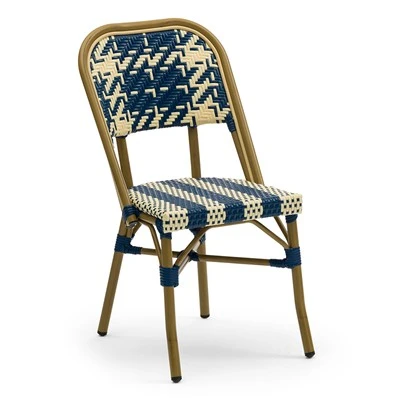
If you’re in the market for outdoor seating, whether it’s for your home, a commercial patio, or a municipal space, reach out to us to talk through your needs. We can send you detailed test data for every chair model, help you pick the right capacity for your use case, and answer any other questions you have about durability, maintenance, or pricing. We’ve been in this long enough to know one thing: buying outdoor furniture is an investment, and you want something that lasts. Don’t just go by the lowest price or a vague “heavy-duty” label—ask about the weight capacity, the testing standards, and how the chair is built. That’s how you’ll get a chair that works for you for years to come.
References
Twisted PE Rope Chairs ASTM International. (2017). Standard Specification for Outdoor Polymer-Based Furniture. ASTM F2096-17.
National Wood Flooring Association. (2020). Composite Decking and Furniture: Durability and Performance Testing. NWFA Technical Bulletin.
Plastics Industry Association. (2019). High-Density Polyethylene (HDPE) for Outdoor Furniture: Material Properties and Testing Protocols. PIA Publication Series.
Foshan Nanhai Ease Outdoor Furniture Co., Ltd.
Address: NO. 41-47, Li Guan Road, Mashe Industrial Area, Lishui Town, Nanhai District, Foshan City, Guangdong Province, China.
E-mail: dony@ease-outdoor.com
WebSite: https://www.ease-furnitures.com/
