Hey there, if you’ve ever worked with temperature measurement systems—whether you’re an engineer at a manufacturing plant, a tech in a calibration lab, or even someone who just dabbles in industrial repair—you’ve probably heard of compensating cables (or C/C, as we in the industry like to shorthand it). But let’s cut to the chase: one of the most common questions we get here (yeah, we’re the folks who’ve been supplying these cables for over a decade) is “What’s the tensile strength of compensating cables?” Compensating Cable
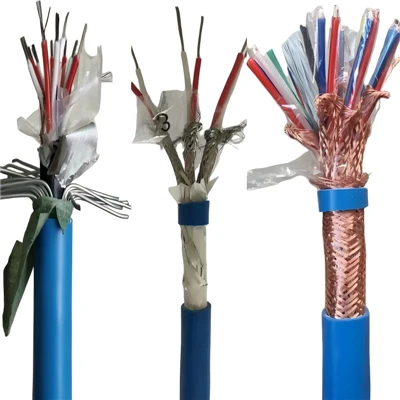
I get it. Tensile strength isn’t the sexiest topic, but it’s the stuff that keeps your system from going kaput mid-shift. Think about it: your thermocouple is in a harsh environment—maybe it’s strung across a factory floor, pulled through conduit, or even dragged a little when you’re doing maintenance. If the compensating cable can’t handle that pull, you’re looking at a broken signal, wrong temperature readings, and a whole lot of downtime. That’s the last thing anyone wants when they’re trying to keep production moving.
First, let’s make sure we’re on the same page about what compensating cables even do, because if you mix them up with regular power cables, you’re gonna have a bad time. Compensating cables aren’t for carrying electricity—they’re for carrying the tiny, millivolt-level signal from a thermocouple (like a Type K, J, T, whatever) back to your temperature controller or transmitter. Their whole job is to match the thermocouple’s voltage characteristic so you don’t get a reading error when the two ends are at different temperatures. They’re made of specific metal alloys (or sometimes copper with special plating) that mirror the thermocouple’s thermoelectric properties—no random junk here.
Now, tensile strength. What is it, exactly? In simple terms, it’s how much pulling force a material can take before it breaks. For cables, that’s measured in pounds-force (lbf) or sometimes newtons (N). But here’s the thing: compensating cables aren’t a one-size-fits-all product. Their tensile strength depends on a bunch of factors—what they’re made of, how they’re built (single conductor vs. multi-conductor, stranded vs. solid), the jacket material, and even the temperature range they’re rated for.
Let’s break it down by the main components first, because that’s where the strength starts. The inner conductors—those are the bits carrying the signal. For most common thermocouple types, like Type K, the conductors are things like nickel-chromium and nickel-aluminum alloys. Those metals themselves have decent tensile strength, but when they’re made into small-gauge conductors (you’re usually looking at 20 AWG to 24 AWG for compensating cables), their individual tensile strength is lower than, say, a thick steel rod. If it’s a solid conductor, it’s stiffer but more prone to breaking if bent or pulled at an odd angle. Stranded conductors, though—those are the ones most suppliers use these days—are made of multiple thin wires twisted together. They’re not as strong individually, but the strand design makes them more flexible and able to handle pulling force without snapping as easily. That’s a big win for installation, right?
Then there’s the jacket. Oh man, the jacket is a huge part of the tensile strength equation. Because the inner conductors only go so far—if the jacket tears or stretches too much, the conductors inside are gonna move or break. What are the common jacket materials for compensating cables? PVC is super common for general-purpose use, right? It’s cheap, works for moderate temps, and has decent tensile strength—usually around 1,500 to 2,500 lbf per square inch (psi) for PVC jackets. Wait, but that’s a measure of the material’s strength, not the whole cable’s. For a typical 2-conductor PVC compensating cable, the overall tensile strength (the amount of pull you can apply before the cable breaks) is usually between 20 lbf and 50 lbf. That’s enough for pulling through short runs of conduit or gentle installations, but if you’re stringing it 100 feet through a tight pipe, or pulling it with too much force, that might be a problem.
If you need something tougher, you go for a different jacket. Like, say, polyurethane (PU) or nylon. PU is way more flexible than PVC and has way better abrasion resistance, plus higher tensile strength. A PU jacket’s tensile strength is around 4,000 to 6,000 psi, and a multi-conductor PU compensating cable can handle anywhere from 60 lbf to 120 lbf of pull. That’s the stuff you want for industrial environments where cables get dragged, stepped on, or pulled over long distances. Nylon jackets are even stiffer—their tensile strength is like 7,000 to 10,000 psi—and those cables can take 100 lbf to 200 lbf of force. We supply a lot of nylon-jacketed compensating cables for automotive manufacturing plants where they’re running cables along assembly lines that have heavy machinery around. Those things get banged up all day, and they never break because of the nylon jacket.
Wait, but let’s not forget about special cases. What if you need compensating cables for high-temperature environments? Like, if the cable is running near a furnace that’s 500°F or higher, the jacket material changes, and that affects tensile strength. For high-temp applications, you might use a fiberglass braid over a ceramic or Teflon jacket. Teflon jackets have a tensile strength of around 3,000 to 5,000 psi, but when you add a fiberglass braid, that ramps up the overall tensile strength to like 80 lbf to 150 lbf. And fiberglass itself doesn’t stretch much, so you don’t have to worry about the cable sagging or getting loose when it’s hot. That’s important because if the cable sags, the conductors can touch each other and cause a short, which messes up the temperature signal.
Another thing: the number of conductors. Most compensating cables are 2-conductor, but some are 4-conductor if you’re measuring two thermocouples at once. The more conductors you have, the thicker the cable is, and the higher the overall tensile strength. Makes sense—more material means more to pull on. But don’t just assume thicker = stronger. The jacket material still plays a bigger role. A thin nylon-jacketed 2-conductor cable is gonna be stronger than a thick PVC 4-conductor one, for example.
Now, here’s a question we get a lot: “Why does tensile strength matter if I’m just installing the cable?” Look, even if you’re being careful during installation, things go wrong. I’ve seen guys rush a job, pull a cable too hard to get it through a conduit, and then have the signal drop a week later because the conductor broke inside the jacket—you can’t see it, so you don’t know it’s broken until it’s too late. Or, over time, if the cable is in a place where it’s constantly being tugged (like near a moving conveyor belt that brushes against it), the constant pull will wear on the jacket and the conductors, and eventually, it’ll snap. That’s not just a hassle—it’s money lost. Downtime in a factory can cost thousands of dollars an hour, so replacing a cable prematurely because it couldn’t handle the tensile load is avoidable.
Also, let’s talk about standards. Compensating cables have to meet certain standards, right? We follow IEC 60584 and ANSI/MCAA standards, which specify the thermoelectric accuracy, but they also have guidelines for mechanical properties like tensile strength. Those standards make sure that when you buy a compensating cable from a reputable supplier (cough cough, us), it’s not just gonna work for temperature measurement—it’s built to handle the pull it’s rated for. We test every batch of our compensating cables for tensile strength, actually. We hook them up to a tension tester, pull until they break, and log the number. That way, we can guarantee that our cables meet the specs we list—no cutting corners.
Wait, what about low-temperature applications? Like if you’re working in a freezer or outside in cold weather? Some jacket materials get brittle when it’s cold, which lowers their tensile strength. PVC, for example, can get brittle below 32°F, so if you’re installing a cable in a cold storage room, you’d want a PU jacket instead, since PU stays flexible in low temps and still keeps its tensile strength. That’s another thing we factor in when we suggest a cable for a customer—they might not even realize that the environment affects how much pull their cable can handle.
Let me give you a real example. Last year, we had a customer in the food processing industry who was installing Type K compensating cables in their new oven line. They originally went with cheap PVC-jacketed cables because they were cheaper upfront. But after a month, half the cables were breaking when the maintenance team pulled them to check the connections. They were pulling through tight conduit, and the PVC couldn’t handle the tension. We suggested our nylon-jacketed Type K compensating cables, which have a tensile strength of around 180 lbf. They switched, and they haven’t had a single break since. That’s the difference between picking a cable that’s right for the job vs. just grabbing the cheapest one.
Now, let’s get back to the numbers, because I know you love that. To sum up, typical tensile strengths for common compensating cables are:
- PVC-jacketed, 2-conductor: 20–50 lbf
- PU-jacketed, 2-conductor: 60–120 lbf
- Nylon-jacketed, 2-conductor: 100–200 lbf
- Teflon/fiberglass high-temp, 2-conductor: 80–150 lbf
- Multi-conductor (4+), any jacket: 30–250 lbf (depends on material and gauge)
But here’s the key: these are general numbers. Always check the specific product data sheet for the exact cable you’re looking at, because gauge (thinner conductors have lower strength), jacket thickness, and construction all change that. If you’re working on a big job, send us a spec, and we can tell you exactly what tensile strength your application needs.
Wait, also—important note: tensile strength is different from tensile elongation. Elongation is how much the cable stretches before breaking. You want low elongation for compensating cables, right? Because if it stretches a lot, the length changes, which can affect the thermoelectric signal. A cable that stretches 5% or less under tension is ideal. That’s another thing we test for—our cables have elongation rates well under that, so you don’t have to worry about signal drift when the cable is pulled.
So, to wrap this up: the tensile strength of compensating cables isn’t a random number—it’s a critical specification that affects how well your system holds up in installation and daily use. It depends on conductor material, jacket type, number of conductors, and environment. Cutting corners on tensile strength might save you a few bucks upfront, but it’ll cost you in downtime and replacements later.

If you’re not sure which compensating cable is right for your application, whether you need a specific tensile strength, high-temp rating, or something for a harsh industrial environment, hit us up. We’ve got years of experience helping engineers and maintenance teams pick the right cables, and we can hook you up with samples or a custom quote. Don’t let a weak cable derail your next project—let’s make sure your compensating cables are built to handle the job.
Aluminum Cable References:
- International Electrotechnical Commission (IEC) 60584-3:2014, Thermocouples – Part 3: Rules for the design and construction of extension and compensation cable
- Measurement Control and Automation (MCAA) Standard MCAA 1.10-2018, Specification for Thermocouple Extension and Compensation Cables
- DuPont Teflon Fluoropolymers Technical Data, Tensile Properties of FEP and PTFE Jacketed Cables
- Thermoplastic Polyurethane (PU) Material Property Data, BASF Elastollan Tensile Strength Values for Cable Jackets
Anhui Huawang Cable Co., Ltd.
As one of the most professional compensating cable manufacturers and suppliers in China, we also support customized service. If you’re going to buy discount compensating cable, welcome to get pricelist from our factory. Quality products and reasonable price are available.
Address: No. 32, East Street, Batian Street, Datong Town, Tianchang City, Anhui Province
E-mail: Linda@huawangcable.com
WebSite: https://www.huawang-cable.com/
