If you’ve ever stood in a production facility at 2 a.m., watching a line of parts roll out without a single defect, or held a new piece of medical equipment that’s been cleared for patient use, you’ve benefited from the quiet work of test equipment. As a test equipment supplier, I’ve spent the last 12 years talking to engineers, line supervisors, and quality leads across every kind of industry, and one thing has always stood out: test equipment isn’t just a set of tools you plug in and walk away from—it’s the backbone that keeps production safe, consistent, and reliable. Too often, people see it as a cost center, but it’s actually the thing that keeps entire industries from failing. Let me break down how it works across the spaces we serve, from the factories that make cars to the labs that develop life-saving drugs. Test Equipment
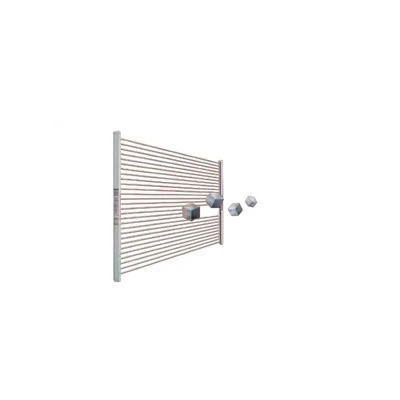
Start with the automotive industry, which was actually one of the first spaces where I saw test equipment evolve beyond simple pass-fail checks. When I got into this business back in 2011, most car parts were tested manually—workers used calipers and basic multimeters to check brake pads, wiring harnesses, and engine components, and a single missed defect could lead to a recall. Today, every step of the automotive production line is tied to some kind of test equipment. For example, wiring harnesses, which are like the nervous system of a car, are tested with continuity and insulation resistance testers to make sure no frayed wire could cause a short circuit or a fire. We supply a lot of those testers to major car manufacturers and their tier 1 suppliers, and what I tell every client here is that these tools aren’t just checking for defects—they’re building trust with the consumer. If a brake line fails a pressure test before it even leaves the factory, that’s one less headache for everyone.
But automotive isn’t just about new cars—we also work heavily in the electric vehicle (EV) space, which has completely redefined what test equipment needs to do. EVs have batteries that are far more complex than gas engines, and a faulty battery cell can be catastrophic. We supply battery cyclers to EV producers, which charge and discharge thousands of battery cells over and over again to make sure they hold their capacity for the 10-year lifespan the industry promises. We also supply high-voltage insulation testers for the EV’s entire powertrain, because 400-volt and 800-volt systems require extremely precise testing—even a tiny fault in insulation can kill someone if they get into an accident. Last year, one of our clients, a small EV startup, came to us because their initial test equipment couldn’t handle their new cylindrical cell design; we worked with their engineering team to build a custom cycler that matched their exact cell specifications, and they launched their product three months ahead of their original timeline. That’s the work that matters—this isn’t one-size-fits-all, especially in automotive.
Next, the aerospace and defense industry is probably the most demanding space we work in. There’s zero room for error here—an airplane part that fails mid-flight can kill hundreds of people, and military equipment that doesn’t work when it’s deployed can cost lives. Test equipment in aerospace has to meet strict standards like AS9100, which is the quality management system specific to aerospace, and every tool we supply has to be calibrated to within microns, not millimeters. For example, we supply non-destructive testing (NDT) equipment to check for cracks in turbine blades or the fuselage of a plane—ultrasonic testers that send sound waves through metal to find tiny, invisible faults that would only show up when the part is under extreme pressure. We also supply avionics test equipment, which tests the radar, navigation, and communication systems that pilots rely on. Last year, I visited a defense contractor that was testing parts for the F-35, and they told me that our NDT testers cut their inspection time for turbine blades by 30%—that’s not just faster, that’s more soldiers getting the equipment they need. What I love about working in aerospace is that there’s no cutting corners here. If the test equipment isn’t accurate, people notice.
Then there’s the medical device industry, which has to follow FDA regulations and ISO 13485 standards that are some of the strictest in the world. Medical devices range from blood pressure cuffs to pacemakers, and every single one has to be tested to make sure it’s safe for patients. We supply a lot of electrical safety test equipment to medical device manufacturers, which checks for things like leakage current—small amounts of electricity that could pass through a device and hurt a patient. For pacemakers, which are implanted in the body, we supply precision signal generators and analyzers that test how the device communicates with the heart, making sure it fires at the correct rate and doesn’t malfunction. We also work with pharmaceutical labs, where test equipment is used to check the purity and potency of drugs before they go to market. For example, high-performance liquid chromatography (HPLC) equipment, which we supply to many pharma clients, separates and analyzes components of a drug to make sure there’s no contamination or incorrect dosage. A friend of mine who works at a pharma lab told me last year that when they were developing a new antibiotic, our HPLC equipment caught a tiny, unlabeled impurity that would have made the entire batch unsafe to release. That’s the kind of impact test equipment has in medical and pharma—it’s not just about making a profit, it’s about saving lives.
I can’t leave out the consumer electronics industry, which is where most people interact with test equipment without even knowing it. Smartphones, laptops, TVs—every one of these products goes through dozens of test steps before it hits store shelves. We supply connectivity testers to phone manufacturers, which check that Wi-Fi, Bluetooth, and cellular signals work properly across all frequency bands. We also supply environmental test chambers, which subject electronics to extreme temperatures, humidity, and vibration to make sure they work in places like a desert or a snowstorm. When a company launches a new foldable phone, like Samsung or Huawei, the first thing they do is test how many times the hinge can open and close before it breaks—we supply the automated testers that do that, millions of cycles in just a few days. A few years ago, we worked with a startup that was launching a wireless earbud line; their initial test equipment was giving them false positives, leading them to scrap good parts. We switched them to our custom audio testers, which accurately measured sound quality and connectivity, and they were able to fix their production line and launch on time. That’s the thing about consumer electronics: customers expect perfection, and test equipment is how you deliver that.
Now, I want to talk about a space that’s been growing a lot lately: renewable energy. This is especially important as the world shifts away from fossil fuels, and test equipment is critical to making sure solar panels, wind turbines, and energy storage systems work as promised. For solar panels, we supply IV curve tracers, which measure the voltage and current of each panel to make sure it produces the correct amount of power. Even a tiny defect in a solar cell can cut a panel’s output by 20% or more, and our tracers can find those defects before the panel is installed on a rooftop or a solar farm. For wind turbines, we supply vibration analysis equipment, which monitors the turbine’s blades and gearbox to detect wear and tear before it causes a breakdown. And for energy storage, we work with companies that make grid-scale batteries, which store power from solar and wind for when the sun isn’t shining or the wind isn’t blowing. These batteries have to be tested to handle thousands of charge-discharge cycles, and our battery cyclers are exactly the tool they need. Just last month, a solar farm project in Texas came to us because their previous test equipment couldn’t test the new bifacial panels they were installing—we modified one of our IV curve tracers to measure both sides of the panel, and they increased their farm’s total power output by 8%. That’s the kind of impact test equipment has on the future of energy.
After working in this industry for over a decade, I’ve learned that the biggest mistake a company can make is buying cheap test equipment to save a few bucks. I’ve seen it happen: a small manufacturing plant buys a low-cost multimeter that’s off by 10%, leading to a batch of defective parts that have to be scrapped. Or a medical device company buys a used signal generator that’s not calibrated properly, leading to a pacemaker that malfunctions. That’s why we don’t just sell test equipment—we offer calibration services, training, and support to make sure our clients get the most out of their tools. Our team is made up of former engineers from all the industries we serve, so when a client calls with a problem, we don’t just talk through specs—we talk through real-world scenarios they deal with every day.
At the end of the day, every industry relies on test equipment because every product has to meet a standard. Whether it’s a car that has to run for 10 years, a medical device that has to be safe for a patient, or a solar panel that has to power a home for 25 years, test equipment is the thing that makes that possible. I talk to clients all the time who see test equipment as a necessary expense, but I try to explain that it’s actually an investment. It’s the thing that prevents recalls, reduces waste, keeps workers safe, and gives customers the trust they need to buy a product.
If you’re in any of these industries—automotive, aerospace, medical, consumer electronics, renewable energy, or any other space where quality and safety are non-negotiable—chances are, our team has the test equipment you need. We don’t do one-size-fits-all solutions; we work with every client to understand their specific needs, whether that’s testing battery cells for an EV, checking turbine blades for an aerospace company, or calibrating medical devices for a hospital. We’re not just a test equipment supplier—we’re a partner, and we’re here to help you make your products better. If you’re looking to upgrade your test processes, troubleshoot a problem, or just learn more about how test equipment can improve your production, we’d love to connect. Reach out to our team to set up a consultation, and we can walk through your needs and find the right solution for you.
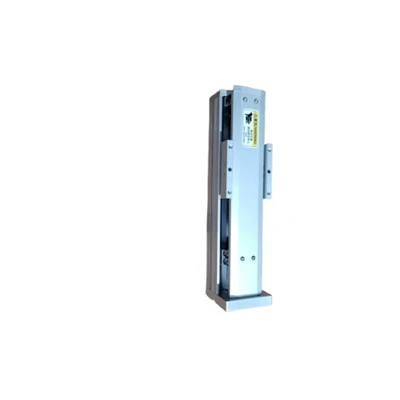
Industrial Belt Guide Rail Drive Module References:
- Automotive Industry Action Group (AIAG). (2020). Advanced Product Quality Planning (APQP) and Control Plan Manual.
- International Organization for Standardization (ISO). (2021). ISO 13485: Medical Devices – Quality Management Systems – Requirements for Regulatory Purposes.
- Aerospace Industries Association (AIA). (2019). AS9100: Quality Management Systems – Aerospace – Requirements.
- International Electrotechnical Commission (IEC). (2022). IEC 60601: Medical Electrical Equipment – Part 1: General Requirements for Basic Safety and Essential Performance.
- International Energy Agency (IEA). (2023). Global EV Outlook 2023 – Battery Testing and Validation for Electric Vehicles.
Yangning (Xiamen) Intelligent Technology Co., Ltd.
With abundant experience, we are one of the most professional test equipment manufacturers in China. As we have world-leading production equipment and strong manufacturing capabilities, we warmly welcome you to buy bulk advanced test equipment from our factory. Customized orders are welcome.
Address: Room 307-2, No. 15 Duiying Road, Software Park Phase III, Torch Hi-Tech Zone, Xiamen, Fujian, China
E-mail: mia@ynautos.com
WebSite: https://www.ynautos.com/
