As a supplier of HEPA (High-Efficiency Particulate Air) and ULPA (Ultra-Low Penetration Air) filters, I’ve had the privilege of witnessing firsthand the critical role these filters play in various industries. One of the most frequently asked questions I encounter is about the relationship between filter area and the efficiency of HEPA and ULPA filters. In this blog, I’ll delve into this topic, exploring how filter area impacts filter efficiency and why it matters in real-world applications. HEPA ULPA Filters

Understanding HEPA and ULPA Filters
Before we discuss the relationship between filter area and efficiency, it’s essential to understand what HEPA and ULPA filters are and how they work. HEPA filters are designed to capture at least 99.97% of particles that are 0.3 microns in diameter. ULPA filters, on the other hand, are even more efficient, capturing at least 99.999% of particles that are 0.12 microns in diameter. These filters are commonly used in environments where air quality is of utmost importance, such as hospitals, cleanrooms, and semiconductor manufacturing facilities.
The filtration process in HEPA and ULPA filters involves several mechanisms, including interception, impaction, and diffusion. When air passes through the filter, particles are either trapped on the filter fibers or adhere to them. The efficiency of a filter depends on various factors, including the filter media, the design of the filter, and the airflow rate.
The Role of Filter Area in Filter Efficiency
Filter area is a crucial factor in determining the efficiency of HEPA and ULPA filters. A larger filter area provides more surface area for particles to be captured, which can improve the filter’s overall efficiency. When the filter area is increased, the air velocity through the filter decreases, allowing more time for particles to be captured by the filter media. This results in a higher capture rate and better filtration performance.
In addition to improving efficiency, a larger filter area can also extend the filter’s lifespan. When the filter area is increased, the filter can handle a higher volume of air without becoming clogged as quickly. This means that the filter can operate for a longer period of time before it needs to be replaced, reducing maintenance costs and downtime.
Real-World Applications
The relationship between filter area and efficiency has significant implications for real-world applications. In industries such as healthcare and semiconductor manufacturing, where air quality is critical, the use of HEPA and ULPA filters with a larger filter area can help ensure a clean and safe environment.
For example, in a hospital operating room, a HEPA filter with a larger filter area can help reduce the risk of airborne infections by capturing harmful particles and microorganisms. In a semiconductor manufacturing facility, a ULPA filter with a larger filter area can help prevent contamination of sensitive electronic components, ensuring the quality and reliability of the products.
Factors Affecting Filter Area and Efficiency
While filter area is an important factor in determining filter efficiency, it’s not the only factor. Other factors, such as the filter media, the design of the filter, and the airflow rate, can also have a significant impact on filter performance.
The filter media is the material used to capture particles in the filter. Different types of filter media have different properties, such as porosity, thickness, and fiber diameter, which can affect the filter’s efficiency. For example, a filter media with a higher porosity may allow more air to pass through the filter, but it may also have a lower capture rate for smaller particles.
The design of the filter can also affect its efficiency. Filters with a pleated design, for example, have a larger filter area than flat filters, which can improve their efficiency. Additionally, the shape and size of the filter can affect the airflow pattern through the filter, which can also impact its performance.
The airflow rate is another important factor in determining filter efficiency. When the airflow rate is too high, the particles may not have enough time to be captured by the filter media, resulting in a lower capture rate. On the other hand, when the airflow rate is too low, the filter may become clogged more quickly, reducing its efficiency.
Choosing the Right Filter
When choosing a HEPA or ULPA filter, it’s important to consider the specific requirements of your application. Factors such as the size of the space, the airflow rate, and the level of filtration required should all be taken into account.
In general, a filter with a larger filter area is recommended for applications where a high level of filtration is required or where the airflow rate is high. However, it’s important to balance the filter area with other factors, such as the cost and the size of the filter, to ensure that you choose the right filter for your needs.
Conclusion
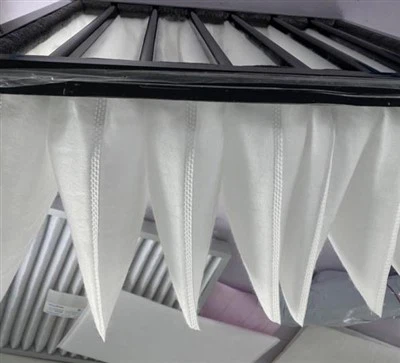
In conclusion, the relationship between filter area and HEPA ULPA filter efficiency is complex and multifaceted. A larger filter area can improve the filter’s efficiency by providing more surface area for particles to be captured and reducing the air velocity through the filter. However, other factors, such as the filter media, the design of the filter, and the airflow rate, can also have a significant impact on filter performance.
HEPA Compact Air Filter As a supplier of HEPA and ULPA filters, I understand the importance of choosing the right filter for your application. If you have any questions or need help selecting the right filter, please don’t hesitate to contact us. We’re here to help you ensure a clean and safe environment for your business.
References
- ASHRAE Standard 52.2 – Method of Testing General Ventilation Air-Cleaning Devices for Removal Efficiency by Particle Size
- ISO 16890 – Air filters for general ventilation — Determination of filtration performance
- EN 1822 – High efficiency air filters (HEPA and ULPA) — Part 1: Classification, performance testing, marking
Snyli Environmental Technology (Shandong) Co., Ltd.
Snyli Environmental Technology (Shandong) Co., Ltd. is well-known as one of the leading hepa ulpa filters manufacturers and suppliers in China. Please feel free to wholesale high quality hepa ulpa filters at competitive price from our factory. Contact us for more details.
Address: Room 907, Building 1, Qisheng Plaza, 1666 Xinluo Street, Jinan Area, China (Shandong) Pilot Free Trade Zone
E-mail: info@snyli.com
WebSite: https://www.snylifilter.com/
