Hey there, if you’ve ever spent a minute stressing about your energy bills running sky high—especially when it comes to heating or cooling your building—you’ve probably wondered if there’s a smarter way to keep things comfortable without pouring cash down the drain. As someone who’s been knee-deep in Energy Recovery Ventilator (ERV) tech for years, I get it. Most building owners and facility managers I talk to are confused about whether an ERV is just another fancy gimmick or if it actually moves the needle on real, long-term energy use. Let’s break this down like we’re chatting over coffee (no jargon promise), because that’s the only way to make this stuff stick. Energy Recovery Ventilator
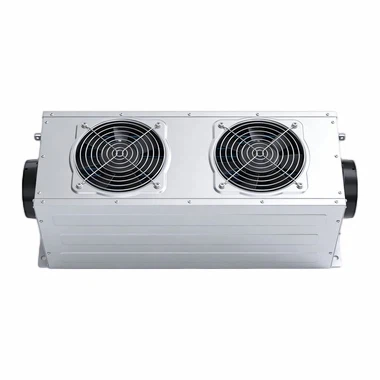
First, let’s level set on what an ERV actually does, ‘cause half the confusion comes from mixing these up with regular old exhaust fans or even Heat Recovery Ventilators (HRVs). Here’s the quick, dirty truth: buildings (especially sealed, modern ones—think offices, schools, apartments, even tight residential spaces) trap in stale air from people breathing, cooking, showering, and off-gassing from carpets or paint. If you just crack a window or blast an exhaust fan to swap that stale air for fresh outdoor air, you’re basically letting all your heated or cooled air escape right outside. That’s where ERVs come in. They’re a dedicated ventilation system that pulls out the bad air and pulls in the good air at the same time, but they swap heat (and moisture, which is the ERV superpower, not HRVs) between the two airstreams. So instead of dumping all your heating energy when you vent, you hang onto most of it.
Now, let’s get to the main question: how does this actually hit your building’s overall energy use? Let’s start with the biggest energy hogs for any building—HVAC (heating, ventilation, air conditioning) systems. Studies show that ventilation alone can make up 10-30% of a building’s total energy consumption, depending on where you live and how leaky your structure is. Without an ERV, that ventilation is a total energy drain. Let’s take a quick example: say you’re in Chicago, where winter temps can drop way below freezing. If you bring in -10°F air to replace stale indoor air, your furnace has to heat that frigid air up to 70°F. That’s a ton of gas or electric energy wasted just on making fresh air comfortable. An ERV? It pulls that cold exhaust air that’s at, say, 65°F (your indoor temp) and transfers most of that heat to the incoming -10°F air. By the time that new air hits your vents, it’s only around 50°F—your furnace just has to bump it up 20 degrees instead of 80. That’s way less work, which means lower gas bills.
Wait, but this isn’t just a winter thing. ERVs are game-changers in summer too, especially in humid climates like Houston or Miami. Hot, humid outdoor air is brutal to cool down. Let’s do the math there: if your indoor air is 75°F and 50% humidity, and you bring in 95°F, 70% humidity outdoor air, your AC has to cool that air, then dehumidify it to get it to the same comfort level. That uses more energy than just cooling alone. An ERV doesn’t just move heat—it moves moisture too. It transfers that excess moisture from the outgoing air to the incoming air, so the fresh air that hits your space is less humid, and your AC doesn’t have to work as hard to pull all that extra water out. I’ve seen clients in Tampa slash their summer AC bills by almost 20% just from that moisture swap alone—no exaggeration.
But here’s the part most people don’t talk about: ERVs don’t just cut HVAC energy. They also affect how your building’s overall load works over time. For example, better indoor air quality (thanks to consistent, filtered ventilation) means your HVAC system doesn’t have to cycle on and off as much to maintain comfort. Short cycling is a huge energy wasters—your AC or furnace kicks on, runs for 5 minutes, turns off, then repeats, wasting energy on startup every time. With an ERV helping keep air temps and humidity steady, your HVAC runs longer, more efficiently, instead of those tiny, wasteful cycles.
Now, let’s get real about the numbers ‘cause I know that’s what matters. The Department of Energy (DOE) has done tons of testing on this, and their findings are pretty clear: in mixed climates (places where you have cold winters and hot, humid summers, like most of the US), ERVs reduce HVAC energy use by 15-25% compared to traditional ventilation systems. In super cold climates, HRVs (which only do heat, not moisture) hit around 10-20%, but ERVs edge past that by 5% or so ‘cause of that moisture control. In really hot, humid spots, it’s even higher—sometimes 25-30% ‘cause the dehumidification savings add up faster.
But hold on—this isn’t a one-size-fits-all. I’ve had clients call me saying, “Wait, I live in Arizona, super dry—will an ERV help me there?” Good question. Even in dry climates, yes, because when you vent, you lose moisture, which means your HVAC has to work harder to keep indoor humidity from dropping too low (which is bad for wood floors, sinuses, etc.). An ERV transfers a little moisture from the indoor air to the dry incoming air, so you don’t have to use a humidifier (another energy hog) as much. That’s another hidden win I didn’t even think about early on.
Now, let’s debunk the common myths, ‘cause that’s where people get hung up. First myth: “ERVs use a ton of electricity, so I’ll just lose all the savings on the fan power.” Yeah, they have a small fan motor that runs—usually 50-200 watts, depending on the size. Let’s put that in perspective: a 100-watt light bulb uses that much, too. If you run that 24/7, that’s like 876 kWh a year. At average US electricity rates, that’s $100-$150 a year. But the HVAC savings? Even on the low end, that’s $500-$1,500 a year per building, depending on size. So the fan power is a tiny fraction of the savings—like 10% max, not enough to eat into the gains.
Second myth: “Sealing a building tight with an ERV is bad—what about indoor air quality?” Nope, that’s exactly why ERVs were invented. Old buildings were leaky, so natural ventilation happened, but modern buildings are super airtight for energy efficiency, so you get sick building syndrome—stale air, mold, dust, volatile organic compounds (VOCs) from cleaning products, furniture. ERVs ventilate continuously, so you’re always getting fresh, filtered air without wasting energy. The DOE says proper ERV installation actually improves indoor air quality by 30-50% while cutting energy use, not one or the other.
Another thing that’s not talked about enough: long-term energy savings vs. upfront cost. I get it—any new system has a sticker shock. A basic ERV for a 1,000 sq ft space is $1,500-$3,000, and installation adds $500-$1,500. But the average payback period is 3-7 years, depending on energy prices and local climate. After that, it’s pure savings. I had a client in Ohio, a small office building, who installed an ERV in 2018. Their HVAC bills that year were $12,000. By 2020, they were at $8,800—That’s $3,200 a year saved. Their payback was like 4 years, and they’ve been pocketing that extra cash ever since. Plus, many utility companies offer rebates for energy-efficient HVAC upgrades—sometimes 20-30% of the ERV cost, which cuts that payback period even shorter.
Wait, but what about maintenance? That’s another question I get all the time. ERVs aren’t set-it-and-forget-it, but it’s super simple. You just change the air filters every 3-6 months, same as your HVAC filter. The core (the part that swaps heat and moisture) only needs a deep clean every 2-5 years, depending on how dusty your outdoor air is. That’s way less maintenance than, say, a boiler or a new AC unit. No fancy tools, no tech guru needed—just a quick filter swap every few months.
Let’s also talk about commercial vs. residential, ‘cause a lot of people mix those up. For small businesses like coffee shops, retail stores, or even multi-family apartment buildings, ERVs hit even harder. Think about a coffee shop—you’ve got all those people breathing, steam from espresso machines, cooking smells. If you just run a regular exhaust fan, you’re blowing out all the heated air in winter or cooled air in summer, which is why you see so many coffee shops with those drafty front doors and huge energy bills. An ERV keeps the air fresh, controls moisture, and cuts ventilation energy by a ton. For apartment buildings, it also means each unit has consistent air quality, so you don’t get complaints about stale air or mold, and the building’s overall HVAC load is lower, which means lower operating costs for the property owner (and sometimes lower utility for tenants, depending on how it’s billed).
Now, let’s get back to the big picture: how does this affect the overall energy consumption of a building, not just HVAC? ERVs also tie into broader building efficiency goals. Many cities and states have energy codes that require net-zero energy by 2030 or 2040, and ventilation is a big part of hitting that target. If you’re already using solar panels or other renewables, an ERV reduces the amount of energy you need from the grid, so you can size your solar array smaller or offset more of your total use. Even for buildings that aren’t going net-zero, lower energy use means less strain on the power grid during peak hours, which is a win for everyone, not just the building owner.
But here’s the key takeaway that I tell every single client: an ERV isn’t just a “ventilation upgrade”—it’s an energy efficiency upgrade that solves two problems at once: comfort and lower bills. The biggest mistake I see people make is either skipping ventilation entirely (leading to bad IAQ and higher long-term costs) or using old-fashioned, wasteful ventilation that drains energy. ERVs fix that by making ventilation efficient, plain and simple.
Now, if you’re reading this and thinking, “Hey, this makes sense—how do I find out if an ERV is right for my building?” Don’t overcomplicate it. Every building is different, so a quick walkthrough or energy assessment is all you need to figure out the size and model that’ll work best for you. Whether you’re a homeowner looking to cut your utility bills, a small business owner tired of sky-high HVAC costs, or a property manager overseeing a multi-family building, an ERV is one of the most cost-effective energy upgrades you can make right now.

I’ve been in this game for years, and I’ve seen first-hand how ERVs turn a building’s energy use from a monthly headache into a long-term saving. No gimmicks, no empty promises—just solid, science-backed energy savings paired with better air for everyone inside. If you’re ready to stop wasting energy on ventilation and start saving cash, reach out to chat about your specific needs. We can go over your building’s size, local climate, and current energy bills to put together a plan that makes sense for you.
Solar Fan REFERENCES
- U.S. Department of Energy. (2022). Energy Recovery Ventilators for Commercial Buildings. Office of Energy Efficiency and Renewable Energy.
- American Society of Heating, Refrigerating and Air-Conditioning Engineers (ASHRAE). (2021). Ventilation for Acceptable Indoor Air Quality (Standard 62.1).
- International Energy Agency (IEA). (2023). Heat Pumps and Ventilation Systems: Energy Efficiency Impacts on Buildings.
Shengzhou Geeking Electric Appliance Technology Co., Ltd.
We’re well-known as one of the leading energy recovery ventilator manufacturers and suppliers in China. With abundant experience, we warmly welcome you to buy bulk discount energy recovery ventilator in stock here and get free sample from our factory. Quality products and low price are available.
Address: No. 19, Putian Avenue, Pukou Subdistrict, Shengzhou City
E-mail: 13588516010@163.com
WebSite: https://www.geekingfan.com/
